
Pothos, also known as Golden Pothos, Devil's Ivy or Variegated Philodendron
Plants that Detoxify the Air
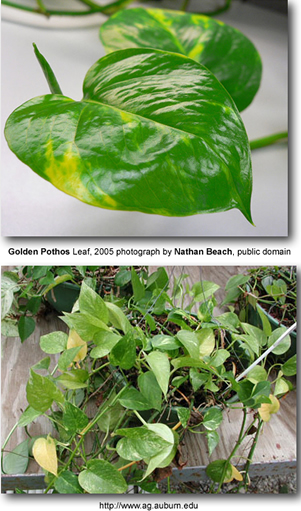 The pothos are tough, adaptable plants. Their climbing/trailing habit makes them extremely decorative and useful in a variety of settings, and their variegated forms add a type of interest not available with true philodendron. Since pothos aren't very demanding, they set the standard for tolerance of neglect. This makes them one of the best plants for public places and those new to indoor gardening.
Pothos are incredibly versatile. They can be planted as:
-
- Single stand alone potted plant on a table or shelf
- Planted as a ground cover
- Grown up a pole as an upright plant
- Hanging basket
- Covering on large trees or palm trunks
- Underplanting 'garnish' for large potted plants or trees
Toxicity to Pets:
Toxic Principle: Allergic reactions, Oxalic acid, Entire plant, Proteolytic enzymes, Calcium oxalate crystals
Clinical Signs: Vomiting, Diarrhea, Redness and swelling, Dermatitis, Itching and burning of lips, tongue, mouth, also throat. Causes oral irritation, intense burning and irritation of the mouth, lips, tongue, excessive drooling, vomiting, difficulty in swallowing. In birds can cause dysphagia, regurgitation, inappetence.
Caring for your Pothos:
Propagation:
Pothos are propagated by tip cuttings. They can even be rooted and grown in water, even though the plant, when potted, cannot stand to have its roots waterlogged.
Soil
Pothos prefer a good loam-based potting mix, such as Bachman's Exceloam.
Light:
The green variety can take low light, but the variegated ones prefer medium light. The variegated types will live in lower light, but their variegation may fade. Pothos can take bright light, if necessary, but not direct sun. The leaves will scorch.
Watering:
Pothos plants prefer to dry out between watering. Check the soil with your finger. If it is dry about an inch down, it is time to water.
Temperature:
Pothos will survive a wide range of environmental conditions, but grows best at 70- 90°F. Minimum temperatures below 70°F and maximum temperatures above 90°F will greatly retard growth.
Fertilizing:
Pothos should be fed monthly with a liquid or water soluble plant food, like Bachman's Excel Gro, at half the recommended rate.
Pests:
The Photos is not affected by many pests; however, watch out for Mealy Bugs.
GreenAndHealthy.Info strives to maintain accurate and up-to-date information; however, mistakes do happen. If you would like to correct or update any of the information, please send us an e-mail. THANK YOU!
