
Date Palm Trees
Plants that Detoxify the Air
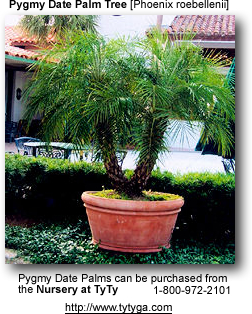 Dwarf / Pygmy Palm Trees are slow-growing trees that make decorative indoor or outdoor plants.
- It is one of the best palms for removing indoor air pollutants and is especially effective for the removal of xylene.
The Phoenix Palm is amongst the most durable of all palms. This palm is very hardy, drought tolerant, and very long-lived if planted in the correct environment. It requires little care other than lots of water and fertilizer during the hot months, and giving palms a little extra nitrogen during the growing season, keeps them looking their best.
The dates grown on the pygmy date palm tree are about one-half the size of the commercial dates, and the same brown-black color. Pygmy date palm trees, Phoenix roebellenii, trunks can grow 10 feet tall and taper-smaller at the bottom and are very decorative specimens in garden landscapes and as office plants.
Placement:
- Most palms need bright natural light year-round. Filtered light near a south-east-or west-facing window (within 3 to 5 feet) is suitable for most indoor palms. The Pygmy date palm will grow very well in low light environments, yet the Pygmy date palm tree will grow well in medium light or even full sun if the tree is watered on hot, dry summer days. It will not generally succeed in dark indoor corners.
- If planting them outside, choose a site that is well protected, either next to a wall, building, or house (south side preferred) or under a large tree.
Care:
- Palms generally prefer to stay moist. Usually a good thorough watering once a week is sufficient. Wait until the soil is dry to touch 2 inches deep. A misting a couple of times a week is good. These palms should never be allowed to dry out or allowed to stand in water. Excessively wet soil can lead to root rot. Water thoroughly when the surface of the soil dries and discard the water in the saucer after the pot drains.
- Soil mixes for palms must be porous with plenty of organic matter to ensure both adequate moisture and excellent drainage.
- Palms grow best with warmth. Protect them from drafts near doors, windows and air conditioning. Most palms prefer temperatures of 60 ° F at night and between 70 and 80 ° F during the day. Many palms will benefit from cooler temperatures of 55 to 60 ° F during the winter, when not actively growing.
- Fertilize either with dilute liquid fertilizer or use a slow-release fertilizer in the container. Fertilize only while the plant is actively growing. Excess fertilizer can be harmful to palms.
- Regularly rinse the foliage to clean the leaves and leach excess fertilizer salts from the soil. Wash the plant with a hard, fine spray of lukewarm water in your shower, or outside during warm weather, to keep insects such as scale, thrips, and mites under control.
- Palms do best when their roots are confined and may only need re-potting every two to three years if roots fill the pot. Repot when needed in spring or early summer.
- Cut off lower leaves as the tips of the fronds become discolored. This highlights the trunk.
- Most palms are propagated from seed. Some can be divided to create new plants.
Potential Problems & Recommendations:
- Cold injury will cause reddish-brown dead areas on leaves after a few days.
- Tips of lower leaves may turn brown and die from excessive fertilization.
- Browning of leaves can also be caused by dry air and/or lack of water.
- If your plant begins to droop, chances are you are under-watering it. If you continue to water your plant, the plant may never return to its normal shape and appearance.
- If the tips of the foliage begin to turn black or yellow, you are probably over-watering your palm.
- Do not use any of the leaf-shining products on palms as they can severely injure the foliage.
- If the plant begins to show a yellow or black spot on the foliage, try moving it further away from the window. It may be receiving too much direct sunlight and actually burning the plant.
- f new growth is damaged, sometimes it can be very difficult to get your palm back to its original healthy appearance. You may prune off the tips if they have turned yellow or black to help the plant's appearance along.
- If the palm tree is located in a hot, drafty area, watch for Spider Mite as they spread rapidly.
>
GreenAndHealthy.Info strives to maintain accurate and up-to-date information; however, mistakes do happen. If you would like to correct or update any of the information, please send us an e-mail. THANK YOU!